Hand Coders Are Angry Right Now. I Understand Why.
AI isn't replacing engineering, it's shifting the craft from typing code to solving problems, and not everyone is willing to make that transition.
Ten months ago, one of my senior backend engineers, Vitaliy, left three comments on a piece of AI-generated code I'd pushed into one of our repos. He called the file awful. Said the logic was in the wrong place. Said a switch case belonged in a constants file. He wasn't joking. He was a senior engineer doing his job, and he genuinely thought the code was bad.
This week, the same Vitaliy sent me an unprompted 8-page proposal to build our first agentic AI coding system at We UC. And in his Slack message, he wrote the line that's stuck with me since: "those MRs you used to send me that gave me plenty to comment on." Winking emoji at the end.
He named the moment he was mocking. He updated his view when the evidence changed. He was the loudest sceptic on my team. Now he's the one leading the build.
What flipped in those ten months is the answer to a question I keep getting asked: why are some engineers leaning hard into AI coding while others are getting actively angry about it? This post is about what the real fight is, why it isn't about the code, and the two paths I see open from here.
AI coding usually gets framed as two camps. Hand coders versus AI-native coders. Real engineers versus vibe coders. Old school versus new school.
That framing is wrong. It's a scale, not a divide.
At one end you've got fully AI-native engineers. They write PRDs and specs in plain English and let AI handle the implementation, the review, the tests. Their craft has moved from typing to specifying, architecting and managing agents.
At the other end, the 100% hand coders. Every line typed. Every character earned. Their craft is in their fingers, along with the discipline and pride they built over a career. To them, AI-written code isn't real work.
Most of the industry sits somewhere in between. The question isn't which camp you're in. It's which way you're leaning, and how fast.
The data backs the direction. Google, at Cloud Next this year, said 75% of their new code is AI-generated. Microsoft puts the number at 20 to 30%. Anthropic's Claude Code team is at pretty much 100%. "AI-generated" means different things at different companies, but the trend is unambiguous: every major engineering organisation is moving down the scale, fast.
The developer side is more interesting. The Stack Overflow 2025 survey showed 84% of engineers use AI tools or plan to. But trust dropped 11 points year on year, to 29%. The gap between use and trust is exactly where the anger lives.
When you've spent 10 or 15 years typing code, you've built a self-image around the act of typing. Your reflexes, your shortcuts, the way you think while you write. All of it tuned to the keyboard.
If I walk in and say "stop typing code, write a spec instead", I'm not asking you to learn a new tool. I'm asking you to change who you are. That's hard for anyone.
MIT Technology Review published a piece at the end of last year with a line from an engineer called Luciano Nooijen that landed harder than any data point I've seen. He'd been leaning on AI tools heavily at work, tried to build a side project without them, and realised he'd lost something: "I was feeling so stupid because things that used to be instinct became manual, sometimes even cumbersome."
Feeling stupid. That's what this transition does to the muscle memory, and to the self-image built on it.
The technical term for what happens next is cognitive dissonance. Your identity says one thing. The world says another. You can update your self-image, which is painful and slow and requires humility. Or you can reject the evidence, which is easier and gives immediate relief, at the cost of being isolated over time. Most people pick the second one first.
The cleanest example I've seen came in a comment on one of my own videos: "He is completely mistaken. Specification-driven development is not the future, but I won't explain why." That last bit is the tell. There's no argument underneath. There's just discomfort.
And it goes deeper than psychology. Your nervous system, biologically, can't tell the difference between transformation and threat. When something familiar starts ending, your body reacts the way it would to physical danger.
The anger isn't malice. It's grief, dressed up as opinion.
After three years of watching this inside my own team, three things predict who makes the turn.
One, the tools have got dramatically better in a short space of time. Engineers who tested AI coding in early 2024 and concluded it wasn't ready were not wrong then. The code often was bad. But if you haven't re-tested in the last three months, your opinion is out of date.
Two, identity. The engineers who adapted earliest on my team weren't the youngest or the smartest. They were the ones whose self-image was less tied to the typing. The ones who already saw themselves as problem solvers first, code writers second.
Three, humility. The technical version, not the soft version. The willingness to be a beginner again at something hard. Most senior engineers got senior by being the smartest person in the room. AI coding makes them wrong, on repeat, until they're not. Getting better feels like getting worse, at first. The ones who could sit with that made the turn. The ones who couldn't, didn't.
None of this is new. Every digital transformation in living memory has followed the same shape.
I watched it up close once before. My father ran a photography business. His craft was developing the film, working with the chemicals, exposing prints in the darkroom. Digital came. He stuck with what he knew for a while because he was good at the old craft. But his competitors switched. They got faster. They started winning more work. So one day he made the call. Renewed his lab, bought a minilab, and within a month he was fully converted. The decision took him years. The execution took weeks.
Today most professional photography is digital. Film still exists, in a respected niche. Same with music. Vinyl passed a billion dollars in US revenue last year for the first time since 1983. Real niche, real money, not how the mainstream listens.
The old craft doesn't die. It becomes a respected niche. Mainstream production moves on.
The legends of hand coding agree. John Carmack, who founded id Software and shipped Quake and Doom, posted earlier this year: "Coding was never the source of value, and people shouldn't get overly attached to it. Problem solving is the core skill."
And DHH, the creator of Ruby on Rails and a vocal AI sceptic for years, summer last year: "I can literally feel competence draining out of my fingers." Six months later, January this year: "Any time I have to type precise syntax by hand now feels like such a tedious chore. Programming is still fun, probably more fun."
From "competence draining" to "tedious chore" in six months. The same pattern I watched with Vitaliy, just on a bigger stage.
Here's where I think we're heading, with the usual caveat that these are estimates, not guarantees.
Within a year, I think 90% of new production code will be written by AI, with humans writing specs, reviewing plans and approving the work. Within three years, hand coding will be considered a niche craft. Beloved. Respected. Real. But not how mainstream production happens.
I could be wrong on the timeline. Anthropic's CEO Dario said in March last year that we'd hit 90% AI-written code across the industry in three to six months, and the latest estimates put us at around 42%. Predictions miss. The direction doesn't.
So I see two paths forward.
Path one. Adapt. Learn to write specs in plain English. Get comfortable letting AI write the implementation while you architect, review and manage. Find the new craft inside the new workflow. This is where mainstream production work is heading.
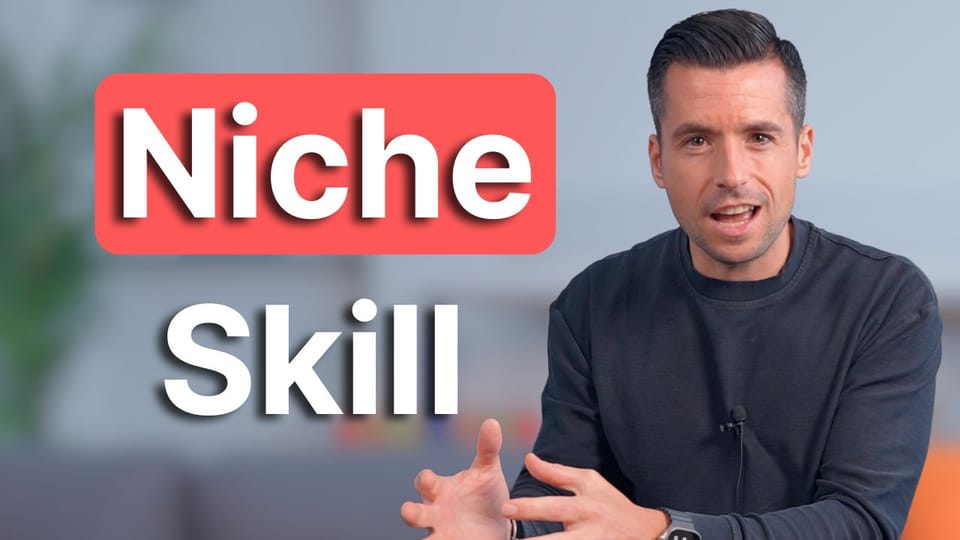
Path two. Choose the niche. If your love is the keyboard, the typing, the craft of writing every line yourself, that is valid. There's a place for you. Just understand that the place is getting smaller, and your value proposition has to get sharper. Film photography is a respected niche. Vinyl is a respected niche. So can hand coding be.
Both paths are honourable. What doesn't work is the third path. Denial. Insisting the change isn't happening, attacking the people reporting it, pretending the world will rewind. That position has never won in any technology transition.
Vitaliy chose path one. Ten months ago he was the loudest sceptic on the team. This week he's the one leading the build. He had the humility to update his view when the evidence shifted, and he's a better engineer for it.
If you're a CEO or operator looking at your own dev team and seeing the same split, don't try to win the argument by force. Outlast it. Keep showing the work. Let the people they respect online start changing their tune too. The wall cracks slower than you'd like, but it cracks.
And if you're an engineer reading this and you feel the anger rising, be honest with yourself about which path you actually want. Either of them is real. Neither requires denial.
Pick your path. Just don't stand in the middle, defensive and angry at the people who picked.
Watch the video:
If running a business through the AI transition is on your plate, I also wrote The CEO Operating System, the framework I use to run multiple companies without burning out. It's free. axelmolist.com/ceo-os
Got thoughts, pushback, or a story of your own on this? Hit reply. I read every email.
Thanks,
Axel.
Join 480+ founders and operators getting my learnings from building and running my companies, straight to your inbox.