The Mobile Phone: My Journey and the Future
From a Nokia 5110 I couldn't afford a SIM card for, to running a telecoms company. 25 years of mobile phones taught me: features don't win. Experience wins.
On 3 April 1973, Martin Cooper stood on a Manhattan sidewalk and made a phone call. Nothing unusual about that - except he was holding a brick-sized device weighing over a kilogram, and the person he called was his rival at Bell Labs.
"Joel, I'm calling you from a cell phone," Cooper said. "A real cell phone. A handheld, personal, portable cell phone."
Joel Engel, head of research at AT&T's legendary Bell Labs, was working on the same problem. But Cooper, an engineer at Motorola, had beaten him to it. That call - made from the middle of Sixth Avenue in New York - changed everything.
It took another decade before anyone could actually buy a mobile phone. The Motorola DynaTAC 8000X went on sale in 1983 for around $4,000. It weighed nearly a kilogram and gave you 35 minutes of talk time before the battery died.
But something had shifted. A device that existed only in science fiction was now real.
I was a child in Lloret de Mar when I first saw a mobile phone up close. A friend's mother had a Nokia 5110 through her work - this must have been around 1997 or 1998. It was a chunky thing with an antenna poking out the top, but I found it mesmerising.
When she upgraded to a Nokia 3210, my friend inherited the old 5110. We played with it together, and eventually I bought it from him. I could not afford a SIM card - my parents certainly were not going to pay for one - so I just explored the menus, learned how the system worked, and played countless hours of Snake.
At some point, I saved enough money from odd jobs to buy a prepaid SIM card. Maybe 1,000 pesetas - we had not converted to euros yet. Suddenly I could send SMS messages to friends who also had phones. We developed our own abbreviated language to fit everything into 160 characters. Every letter counted.
What strikes me now is how different those abbreviations were when I moved to the UK and started texting in English. The Spanish shortcuts I knew were completely useless. English teenagers had developed their own compressed language. It reminded me that language evolves constantly - shaped by the constraints we operate within.
After the 5110, I bought an Alcatel One Touch DB from another friend. That phone had the strangest ringtones I have ever heard - almost duck-like. Alcatel merged with Lucent in 2006, then Nokia acquired them in 2016. The name has essentially vanished into the oblivion.
Then came the Nokia 3210 - probably my favourite phone of that era. It was sleek, thin, and had a feature that absolutely captivated me: the ringtone composer.
You could create your own ringtones using the phone's keypad. Seven notes - C, D, E, F, G, A, B - across three octaves, with controls for duration and rests. It sounds primitive now, but I spent hours composing melodies. There was something magical about creating music on this tiny device and then hearing it ring in your pocket.
The 3310 followed, with an upgraded Snake game that consumed far too much of my time. Then a blue Nokia 5210 with a rubber chassis - so durable I once threw it across a public square to a friend. If he had missed the catch, the phone would have been fine.
The 8210 was impossibly small for its time. I loved showing it off.
But then came a milestone. My first brand new phone.
I worked with my father at a tourist venue in Spain. We photographed people, developed the images while they watched a flamenco show, then went table to table selling the photos. At the end of each night, we tallied our sales and earned commission.
From that money, I walked into a Movistar shop and bought a Nokia 7250. Purple and black, with a camera and a colour screen. Revolutionary features at the time.
I felt like an astronaut with the latest technology in my pocket. Everyone I showed it to was genuinely interested. For a moment, I was at the forefront of what was possible.
That feeling - being at the cutting edge, experiencing technology before most people - is something I have chased ever since.
After the 7250, I tried the Nokia 8910i with its titanium case, but it was not as capable. Then the Nokia N70, my first multimedia phone with a proper file system and the biggest screen I had owned. But its music functionality was terrible. I wanted to carry my music library with me, but the N70 could only store a few songs and required proprietary Nokia headphones.
So I bought a Sony Walkman phone. It had an adapter for regular headphones, and I spent hours listening to music - though I had to be mindful of storage and audio quality. Getting songs onto the device via Bluetooth was painfully slow, and anything above 64kbps felt like a luxury. Now we consider anything below 320kbps an abomination.
In January 2007, I watched Steve Jobs walk onto a stage and announce the iPhone. I had been using Macs for a few years by then, but this was different. The presentation itself was a masterpiece - the most polished product announcement I had ever seen.
I bought an iPhone from eBay in early 2008, funded by money I earned DJing. Everyone around me was using BlackBerrys. They told me the BlackBerry was for business, the iPhone was for teenagers watching movies.
I disagreed. I thought the iPhone was the future.
That first iPhone did not even have copy-paste. You could not rearrange apps on the home screen. But the interface, the form factor, the attention to detail - Apple and Steve Jobs had taken tremendous care with every element.
Jony Ive under Steve Jobs was one of the best designers the world has ever seen. Steve pushed him to focus on what really mattered. The results spoke for themselves.
I tried a BlackBerry Curve around 2010, carried two phones for a while. The typing was faster, but I returned to the iPhone. The overall experience was simply better.
The Google Pixel line caught my attention when it launched in 2016. Google partnered with HTC to build the hardware, but the key promise was pure Android - the operating system as Google intended it, without manufacturer bloatware.
I tried the Pixel 1, but compared to my iPhone X at the time, it felt unpolished. The Pixel 3 was different. I switched entirely and used Pixels for over two years.
The camera was the main draw. Google's computational photography produced images that outperformed the iPhone despite having inferior hardware. The software processing made the difference.
But I was deep in the Apple ecosystem - MacBook, Apple Watch, iPad. Using an Android phone meant constant friction. The Apple Watch worked only in standalone mode. File transfers between devices became complicated.
I even tried a Samsung Galaxy S20 for about a week. Samsung's bloatware reminded me of everything wrong with Windows. Applications nobody needed, bundled into the system. The camera, despite impressive specifications, produced worse photos than my Pixel. I sent it back immediately.
Eventually I returned to the iPhone 12 and have stayed with Apple since. The ecosystem integration is too valuable to sacrifice. My MacBook, iPad, iPhone, Apple Watch, and Vision Pro all communicate seamlessly. Apple has built something genuinely difficult to compete with.
What strikes me about the mobile phone story is not just the devices - it is the infrastructure that makes them work.
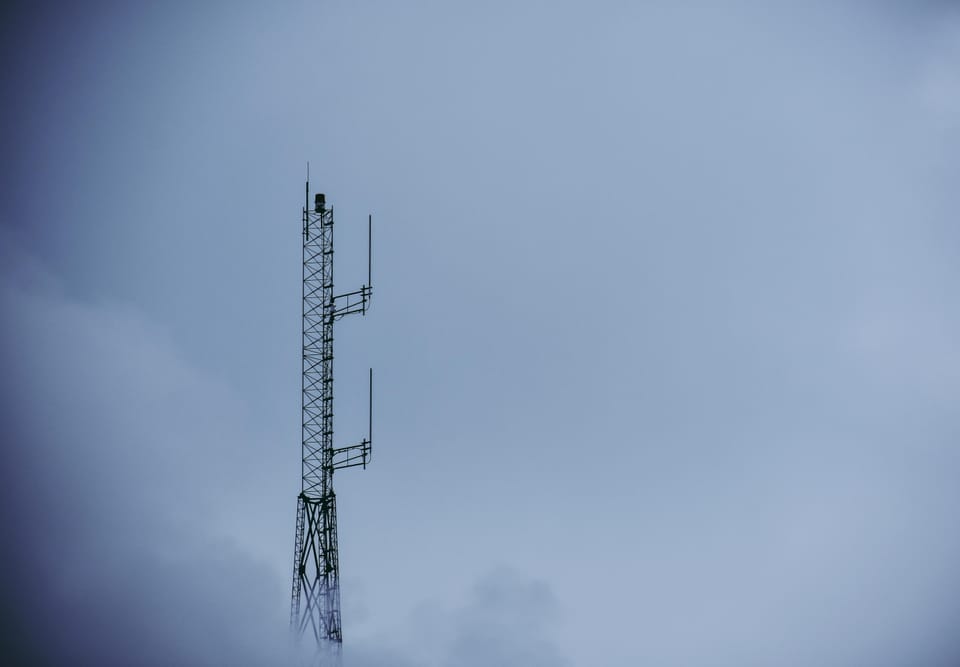
Every generation of mobile technology - 2G, 3G, 4G, now 5G - operates on different frequency spectrums. Each transition requires new equipment on the masts. Antennas need upgrading, replacing, or maintaining for the new frequencies.
5G represents the biggest step change. It uses much higher frequencies - millimetre waves that deliver incredible speeds but travel only 300 to 500 metres and struggle to penetrate buildings. The result is that carriers need far more antennas, placed much closer together.
I now see antennas appearing in places they never would have before. Small cells mounted on lamp posts and street corners, no bigger than the post itself. The old model of massive fenced-off masts is giving way to distributed networks of smaller, more numerous access points.
The engineering achievement behind global mobile coverage is remarkable. Billions of people can communicate from almost anywhere, and we barely think about the infrastructure making it possible.
I do not know what comes next. Nobody does. But I have some thoughts.
Jony Ive and Sam Altman are building something together at OpenAI. Reports suggest a pocket-sized, screenless device - not a wearable, not glasses, not earbuds - that could launch as early as 2026. Altman describes it as bringing "peace and calm" rather than the constant notifications of current devices.
I am cautiously optimistic. Ive is a world-class designer, but Steve Jobs brought out his best work. Sam Altman understands AI deeply, but he is not a product visionary in the same mould. Whether they can produce something truly revolutionary remains to be seen.
The smartphone itself will likely persist for years. Apple and Google have built ecosystems that are extraordinarily difficult to displace - not just the hardware, but the app stores, the developer communities, the habits of billions of users.
But the interface is evolving. We will use voice more as AI systems understand natural language better. MCP servers - Model Context Protocol - can translate human intentions into API calls, bridging large language models and existing applications. This is happening now.
I see a future where we interact with computing through whatever method is most convenient at the moment. Sometimes text. Sometimes voice. Sometimes vision. Eventually, perhaps, direct neural interfaces - though that remains science fiction for the foreseeable future.
The devices themselves may become more ephemeral. Not one phone that does everything, but multiple specialised tools we reach for as needed. The interface will adapt to context rather than forcing us to adapt to it.
This matters to me personally because of We UC - the unified communications platform we are building.
Right now, We UC runs on mobile phones, tablets, desk phones, computers. These are the devices people use today. But as interaction methods evolve, we must evolve with them.
The underlying infrastructure we provide - voice, messaging, video - will remain valuable. But the interfaces through which people access that infrastructure will change. We need to be ready.
I want to maintain the feeling I had as a teenager with that Nokia 7250 - at the forefront of technology, showing people something genuinely new. I want We UC to be at that cutting edge, presenting technology in ways that are intuitive and frictionless.
Whatever devices people use to communicate in the future, I want We UC to be ready for them.
The mobile phone transformed how we connect with each other. The next transformation is already beginning. And I intend to be part of building it.
Become a subscriber receive the latest updates in your inbox.