The Principles That Guide Me in Business and Life
My guiding principles I use for business and life.

I am in Spain right now, spending a few days with the family. And when I get time like this - away from the day-to-day, away from the noise - I tend to reflect.
I thought I would put together a list of my fundamentals. The guiding principles I use for business and life in general. Not because I have it all figured out. I definitely do not. But because I think there is value in hearing how other people think about these things. Maybe some of it resonates. Maybe it helps you put into words something you already felt but had not formalised yet.
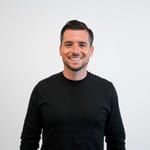
A bit of context if this is your first time here. My name is Axel Molist Cordina. I am originally from Spain, and I have been living in the UK since 2008. I founded a telecoms services company called circle.cloud - built it from scratch to about 140 people - and I now run a telecoms software company called We UC, which we are in the process of launching as a SaaS product. So I have been building for over a decade. Everything I am about to share comes from that experience.
These principles are not for everyone. They are what works for me. But if the rationale behind any of them feels right, then perhaps they will be useful for you too.
This is the foundation for everything else.
I genuinely believe the only way to do great work is to love what you do. Building something - a company, a product, anything worthwhile - is incredibly hard. There are countless moments where a rational person would simply walk away.
The only people who push through are the ones who actually love the work itself. Not the money. Not the status. The work.
Steve Jobs put it well in his 2005 Stanford commencement speech: "The only way to do great work is to love what you do." He also said that only the people crazy enough to think they can change the world are the ones who actually do. I think he was right. You have to be obsessive. You have to love it.
And if you do great work, money follows. Not immediately. Not always on your timeline. But it follows. The mistake is chasing money first and hoping quality comes later. It does not work that way.
There is a line from Scarface that has always stuck with me: "All I have in this world is my balls and my word, and I don't break 'em for no one." It resonated because there is genuine truth in it.
You have to keep your word. If you say you are going to do something, do it. It does not matter how small the commitment seems. If you said you would call on Tuesday, call on Tuesday. People remember when you follow through. And they remember even more clearly when you do not.
I stay true to my word. Always. It is not negotiable. Your reputation is built one kept promise at a time.
This one sounds obvious until the moment arrives when the right thing is also the harder thing. The slower thing. The less profitable thing in the short term.
I have watched people cut corners because they could see a quick win. But that quick win sometimes meant hurting someone, or doing something ethically grey, or going down a path that bypassed lessons they actually needed to learn.
Do not take the shortcut. Even if doing the right thing takes three times longer to get you where you are going, you will arrive with your integrity intact. And that matters more than speed.
There is an old saying that a woodpecker does not peck a thousand trees once - it pecks one tree a thousand times and gets dinner. I love that because it is exactly how building a business works. You pick a thing. You commit to it. And you keep going.
Most things take longer than you expect. That is fine. The people who stay the course - who do not jump to the next idea every time things get hard - are the ones who eventually break through.
Do not be shy. Ask for what you want.
I have lost deals simply because I did not ask for the order. I was waiting for the customer to say yes. They did not. Sales is not just about building relationships. At some point you have to say, "Let's do this." That is it. Assume you have the order. That is the part most salespeople avoid.
It is the same outside of sales. If you want something - a meeting, a favour, an introduction - ask. If you do not ask, you do not get. It really is that simple.
This one is related but different. Do not wait for things to come to you.
Some companies build their entire model on referrals and word of mouth. That is fine. But I believe you also need to go and get the business. Pick up the phone. Show up. Speak to people. Meet new people. Move. Be proactive.
The phone is not going to ring itself. And opportunities do not land on your lap. You have to go out and create them.
I set myself deadlines for everything, and I make them optimistic on purpose.
When you give yourself a tight amount of time, you fill that time with focused work. Give yourself two weeks, it takes two weeks. Give yourself five days, you find a way. That is Parkinson's Law in action.
Many of my projects have overrun their original timeline. That is fine. The deadline is not there to punish me. It is there to create urgency. Without a deadline, things drift. And drifting is what kills most projects.
However big you are thinking, think bigger.
Whenever I come up with a goal or an idea, I ask myself: can we do ten times this? Can we make it bigger, better, bolder? That does not mean every idea needs to be massive. It means you should test the ceiling before accepting the floor.
Most people set goals based on what feels safe. Safe goals produce safe results. Push the number. You can always scale back. If the idea does not scare you a little, you are probably not pushing far enough.
Your comfort zone is your limiting zone.
Every significant thing I have done - the first cold call, hiring my first employee, stepping back from the company I built, making videos like this one - felt uncomfortable at the time. That discomfort was not a warning. It was a signal that it mattered.
If you are not regularly doing things that make you uncomfortable, you are not growing. It is that simple. Push yourself out of the comfortable space. That is where progress lives.
Move. Act. Stop thinking about it.
Overthinking kills more progress than bad decisions ever will. There is a real cost to inaction. A wrong decision gives you information - you learn, you correct, you move forward. No decision gives you nothing. You are just stuck.
I would rather make a move and get it wrong than sit and analyse until the moment passes. If you got it wrong, you will figure it out. But you have to move first.
They say your gut is your second brain. There is real science behind it - neurons exist in your gut, and that is what people call the "gut feeling."
I think it is how you connect your conscious mind to your subconscious. In so many decisions I have made in business and life, I have made them when the decision felt right - not when the spreadsheet told me to act.
Our brains are far more powerful than we give them credit for. I believe your gut is your gateway to that deeper level of intelligence. Your intuition. I trust my gut on every major decision, and so far it has served me well.
My father always told me something his mother used to say.
"No et fiis ni de la teva mare." That is Catalan. It means "do not trust even your mother."
It sounds extreme - and it is extreme - but the principle behind it is sound. Be careful with people. Especially when money is involved. I have seen people do surprising things when the stakes are high. People I thought were solid.
Trust with limits. Do not trust anyone entirely.
When hiring, attitude beats skills. Every time.
Skills can be taught. You can teach someone a system, a tool, a process. But attitude - which is based on their perspective on life - determines how they show up, how they handle pressure, whether they actually care. All of that is rooted in how they see the world. And you cannot teach that. It is who they are.
I have learned this the hard way. I have hired people with incredible CVs who simply did not have the right attitude. And I have hired people with very little experience who turned out to be brilliant because they genuinely wanted to learn and improve.
Find people who care. Teach them the rest.
This one is hard. Genuinely hard.
I founded circle.cloud. Built it from nothing. Did the telemarketing, the sales, the installations, the billing, the support - all of it. But in order to grow the business, I had to step back. I hired an operations manager, an engineering manager, a sales manager, and eventually a board of directors and a CEO. I moved to chairman. The business operates without me day to day now.
For a founder, letting go feels like losing control. But it is the opposite. It is gaining freedom.
And I believe your leadership team needs to be genuinely invested. The only way I have found to make the key people in your business feel like owners is through equity. Give them a minority stake. Something that aligns their incentives with the long-term success of the business, not just a salary. Never give away control. But give them something to care about.
This one is underrated.
Being able to see things from someone else's perspective - understanding how they actually feel in a situation, not how you think they should feel - gives you a genuine edge. It changes how you lead, how you sell, how you handle conflict. Everything.
Most people listen to respond. Very few people listen to understand. There is a massive difference.
I have a policy: no meetings before 11 AM, unless completely necessary.
The morning is when my brain is sharpest. That is when I think, plan, and work on the hardest problems. Most people fill their mornings with meetings and emails - other people's agendas - and by lunchtime they have spent their best cognitive hours on things that could have waited.
I use my mornings to putter. To think about business direction, company structure, whatever the biggest challenges are. Sometimes I do not produce anything visible. But that thinking compounds over time.
Spend time alone. Ruminate. Let your mind work through the hard problems before the day takes over.
When your to-do list is a mile long and everything feels urgent, the worst thing you can do is try to deal with it all at once.
One thing at a time. Give your full attention to the thing in front of you. Finish it, or get it to a point where you can move on, and then - and only then - shift to the next thing.
This is not about productivity. It is about preventing overwhelm. When you try to hold ten problems in your head at once, your stress rises and your output drops. Deal with one. Then the next. It sounds too simple to work, but it does.
Every day there is noise. Emails, messages, requests, small fires. Most of it does not matter.
The signal is the one or two things that actually move you forward. Everything else is noise. And the hard part is not ignoring the things you do not want to do - it is ignoring the things you do want to do.
There is a story about Steve Jobs. Jony Ive said Steve used to ask him how many things he had said no to. And when Jony listed a few, Steve was not impressed, because Jony did not want to do those things anyway. That is not focus. Focus is saying no to the things you want to do with every fibre of your body - because the signal matters more.
Increase the signal-to-noise ratio. Say no to everything that is not the main thing. And do the main thing until it is done.
When deciding what to work on, do the work that will produce the majority of the results first.
That is the Pareto Principle - roughly 80% of your results come from 20% of your effort. So when prioritising, ask yourself: what is the thing that will get me the biggest result in the least amount of time?
Start there. Because that early progress gives you momentum. It gives you a feeling of accomplishment that you can carry forward - either onto the next task or to keep pushing on the one you are on.
Most people spread their effort evenly across everything. Do not. Find the 20% that produces 80% of the output. Hit that first. Then reassess.
I think sleep is the most underrated performance tool there is.
I aim for seven and a half hours every night. I do not always hit it, but I know the difference it makes. Everything deteriorates when you are under-slept. Your decisions, your mood, your patience, your clarity, your ability to handle stress. Everything.
And the data supports it. Sleep deprivation has been shown to impair cognitive function to the same degree as having a few drinks. That is not a small thing.
I have learned to treat sleep as infrastructure. Not a reward for finishing work. Not something to sacrifice to get more done. It is the thing that makes everything else possible.
This one is straightforward. Eat good food. Cut out the processed stuff. Do not overeat - that is one I still struggle with.
And do not eat within four hours of bed. That has been massive for me. Eating late wrecks sleep quality, and then everything cascades from there.
I am not extreme about diet. I do not follow any particular plan. I just try to eat real food, eat reasonable amounts, and give my body time to digest before sleeping. It is simple, but the impact on how I feel day to day has been enormous.
I try to train at least five days per week. Weights. Ideally I would do something every single day, even if it is just a lighter session.
I am not perfect at this. Travel disrupts my routine. Bad sleep undermines my motivation. But I am working on making it non-negotiable. Because when I am consistent with training, everything else improves - my energy, my focus, my resilience, my mood and my sleep.
Your body is the engine for everything else. If the engine is not looked after, nothing else runs properly.
Alcohol is a trap. And I say that from experience.
A few years ago I read a book called This Naked Mind and it made me think about something simple. We were all happy as kids. No alcohol. Perfectly content. So why do we believe we need it as adults? We do not. We are habituated to it.
I stopped drinking for over a year. I felt amazing. Then on holiday, my wife suggested I have a beer. And I thought, well, I will just have one. Within a few months I was back to drinking almost daily.
January of this year I stopped again. Currently just over two months in. I feel great. No plans to go back.
Not drinking has improved my sleep, my clarity, my productivity, my mood - everything. If there is one thing on this list that has made the biggest difference for me recently, it is probably this one.
I have a lot already. More than I sometimes realise. More than I ever imagined as a kid. And I take it for granted more than I should.
But when I actually stop and remind myself of what I have - where I am, who I am with, what I have built - I feel genuinely happy. Not in a forced way. In a real way.
It is easy to always be chasing the next thing. Gratitude is the counterbalance. It is what stops ambition from becoming a treadmill.
Last one.
Everyone is different. Embrace what makes you different. There is nobody out there like you, or like me. Which makes it pointless to compare your life to someone else's.
I think we have fallen into this trap because of social media. We see other people's highlight reels and believe we are falling behind. But you are not behind. You are on your own path.
And the freedom that comes with genuinely accepting this is enormous. Stop caring so much about what other people think. We are only here for a short amount of time. Everyone is busy with their own lives. They are not thinking about you anywhere near as much as you imagine.
I used to care a lot more than I do now. And that freedom has changed how I make decisions, how I work, and how I live.
Those are my guiding principles. Twenty-five things I come back to, especially when I need to make a decision or when things get complicated.
I am not perfect at all of them. Some I have followed for years. Some I am still working on. But having them clear in my head helps. And I hope putting them into words helps someone else too.
If you want to go deeper into how I structure my days and my decision-making, I have put together something called the CEO Operating System. You can find it at axelmolist.com/ceo-os.
Become a subscriber receive the latest updates in your inbox.